AI-powered development that makes it to production
AI can now write most of the code, but what really makes the difference between a prototype and professional-grade, high-quality results is what’s known as AI Harness Engineering: the discipline of designing the environment a AI works within.
Agent = Model + Harness
The core problem
More code doesn’t mean better software. Without a purpose-built environment, every agent session starts from scratch, and the agent ends up solving for what it thinks you meant, not for what you actually need.
What do we mean by harness?
Everything that surrounds the model: tools, constraints, context, validators and feedback loops.
Harness Engineering
The discipline of designing the environment around the known weaknesses of the underlying model. It isn’t an alternative to traditional development: it’s the next step in its evolution, built for the era of autonomous agents.
At Xeridia, we apply agentic development across many of our projects, and we have Harness Engineering experts on the team.
Harness Engineering transforms every phase of the software development lifecycle
At Xeridia, we’ve spent more than 20 years continuously improving the software development lifecycle. AI-powered development doesn’t add new steps: it changes how each one is done and puts checkpoints between them.
Requirements
Documents in Confluence / user stories in Jira
AGENTS.md + executable specifications that guide the agent
Design
Informal design, static diagrams, documents in Confluence / Jira
Formal specifications with rules the agent can check
Implementation
The developer writes all the code with autocomplete, without any context
Orchestrated agent guided by specifications, tools and checkpoints
Testing
Manually written tests
Improvement without regression: every error becomes a permanent test
Review
Subjective code review (changes reviewed manually)
Automated pre-review + focused human review
What stage of maturity is your team at?
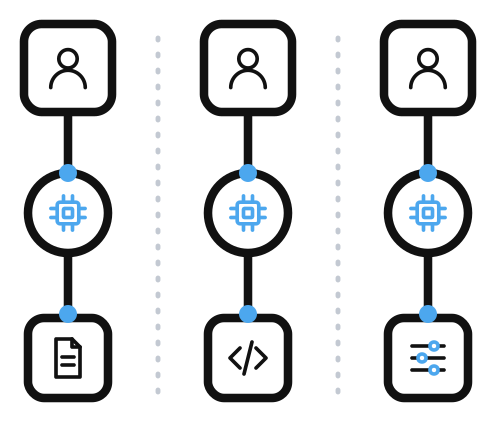
Level 1
Individual
Everyone uses AI in their own way, with no shared context or patterns. Results vary and can’t be reproduced.
Next step: measure with test coverage and CI before adding anything else: without feedback signals, you have nothing to build on.
Level 2
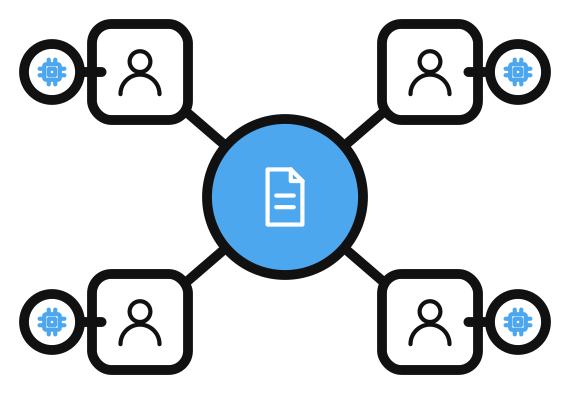
Guided
Shared guidelines and standardised prompts are in place, but nothing enforces them: there are no automated checkpoints.
Next step: turn the guidelines into checks that run on their own: linters, hooks and schemas.
Level 3
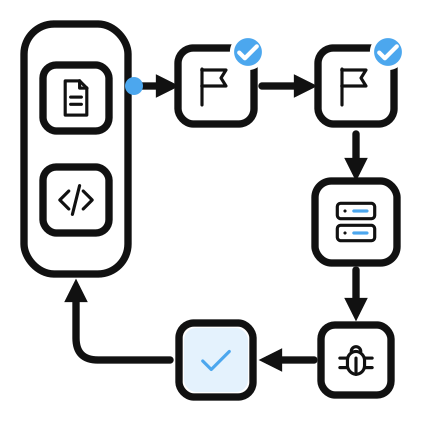
Systematised
The environment is code: agent rules and specifications live in the repository, checkpoints are built into CI/CD and every error that gets fixed becomes a permanent test.
Next step: widen the agent’s scope according to risk and add AI-assisted review with a human making the final call.
Level 4
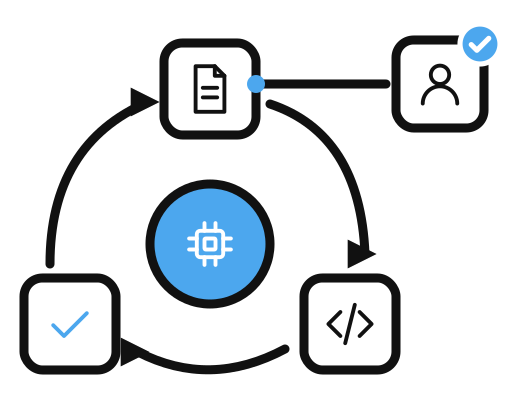
Autonomous
The agent takes part in the whole lifecycle with minimal supervision: it generates specifications, implements and tests, while a person validates the design.
Next step: put governance in place: traceability, budget and risk-based review. You can’t get here by skipping levels.
Four ways to get started, depending on your project
Depending on the type of project, your ambition and how urgent it is. There’s no single right sequence, but there are wrong ones: skipping phases, or putting guidance in place without sensors.
New service with the environment in place from day one
The highest return. A service designed from scratch with specifications, checkpoints and cumulative improvement. It proves the value without touching anything that already exists.
Stabilising what already exists and building the environment progressively
Four phases: instrument, stabilise, guide and enable. It improves the current environment and enables AI in a sustainable way.
Verifiable legacy migration
Start with discovery and migrate in stages, checking each one against the original.
Quick wins with agents, right now
Document services, analyse technical debt, generate retroactive specifications and triage bugs. It doesn’t require changing any processes.
Let’s talk about bringing AI into your development lifecycle
Tell us where you’re starting from. We’ll suggest a first step with a clear scope and no small print.